

TL;DR
-
Boaters face rising costs and unpredictable daily docking fees, with 84% of marinas reporting higher expenses in 2024.
-
Many choose memberships for steady pricing, bundled services, and priority slips instead of paying daily rates.
-
Marinas use DockMaster to manage memberships, track slip usage and billing, and efficiently upsell services.
-
Frequent members save money over time, while occasional boaters benefit from flexible daily docking, creating a balance.
Boating has always been a premium lifestyle. However, in recent years, the cost of ownership and operation has risen sharply. Fuel prices fluctuate, maintenance costs increase, and marinas face higher expenses related to staffing, insurance, utilities, and environmental compliance. As a result, both boaters and marina operators are taking a closer look at how docking is priced, and whether traditional daily docking fees still make sense.
For boaters, the decision often comes down to predictability versus flexibility:
-
A marina membership offers stable monthly or annual costs, bundled benefits, and priority access.
-
Daily docking fees, on the other hand, provide freedom and pay-as-you-go convenience. But it often comes with pricing uncertainty and seasonal surcharges.
For marinas, the decision is just as important. Memberships provide a steady income and help build long-term relationships with customers. In contrast, daily fees can generate more revenue during busy seasons. The key is to find the right balance and make sure customers understand the value of each option.
In this guide, we’ll break down actual costs, benefits, and use cases of marina memberships versus daily docking fees, helping both boaters and marina operators determine which approach delivers the greatest long-term value.
Key Pain Points in Docking Decisions
Boaters and marinas now face real problems when they try to compare marina membership with daily docking fees. Costs have gone up in many places, rules are changing, and prices are not always easy to understand. This makes it hard for people to make smart choices.
1. Boaters are unsure which option delivers the best long-term value
Many boat owners don’t know if a membership will save money in the long run. Daily docking fees change by season and by location. Some marinas cut rates by 30% to keep boats in the water when visitor numbers drop, but others still raise fees as costs rise.
For example, in 2024, marinas in The Bahamas cut rates by up to 30% to maintain occupancy as boating visitors declined. The 2024 Marina Dock Age Annual Marina/Boatyard Trends Survey found that 84% of marinas faced rising costs. As a result, 70% of marinas increased slip fees, and 60% raised service rates, showing a shift toward dynamic pricing.
Because prices are so different and change often, boaters may just pick daily docking even if it ends up costing more overall.
2. Marinas struggle to communicate the benefits of recurring memberships
Marinas often include savings or perks inside a membership, but boaters may never hear about them. If all a boater sees is a high upfront price for a membership, they may ignore it.
Then, they pay daily rates that can add up fast. This problem gets worse when marinas don’t share detailed pricing or examples.
3. Seasonal fluctuations complicate pricing decisions
Many marinas charge very different prices in peak months and slow months. A daily fee in high season can be much higher than in off-season.
In 2025, 42% of marina operators said filling slips or booking rentals was their biggest challenge. This highlights how critical peak-season demand is.
Some marinas adjust prices based on demand and time of year. This makes it hard for boaters to plan their annual costs, and for marinas to keep a steady income year-round.
4. Unpredictable daily fees create budgeting uncertainty for boaters
Docking fees are not the same every day. They can go up in busy times or when local fees change.
In some places, new government fee increases are being put in place that will raise dock rates by around 20%. For example, Bahamian marinas urged the government to make all operators, including private and unapproved docks, pay the same fees when the increases take effect. This has made boaters cancel trips and hurt business at some marinas.
5. Marinas miss out on recurring revenue streams
When marinas rely mostly on daily docking, their income goes up and down a lot. Many marinas say their costs for things like insurance, fuel, staff, and utilities keep rising.
If they had more members, they could count on a steady income to help them plan and run the marina more effectively.
Marina Membership vs. Docking Fees: A Cost Breakdown

Here’s a look at what you get with a marina membership compared to paying daily or seasonal docking fees.
- What’s in a marina membership
A marina membership usually includes:
-
Unlimited or cheaper dock space
-
Reserved or priority slip access
-
Lower fuel prices
-
Discounts on storage, maintenance, and haul‑outs
-
Showers, Wi‑Fi, parking, lounges
-
Priority for repairs or services
Memberships can cost a few thousand dollars a year. Prices go up in big cities and premium locations. Many full‑service marinas also include staff, security, and amenities that casual dockers don’t get.
- Understanding daily and seasonal docking fees
Docking cost depends on where you tie up, how long you stay, and boat size. City dockage is some of the highest in the U.S. Rates can vary as per:
-
Off-season: Lower base rates, more availability
-
Peak season: Premium pricing, limited slips
-
Special events or holidays: Surge pricing
For example, in New York City, seasonal slip fees range from about $65 to $230 per foot. Luxury or high‑demand spots push toward the upper end of that range. If you’re visiting for a night or a few days, transient slips run about $2 to $5 per foot per day. This is just the base rate, and it often doesn’t include power or water.
At city‑run Dyckman Street Marina, summer seasonal dockage is about $170 per foot, with winter storage around $140 per foot. Transient daily rates there can be $4.50 per foot.
- Hidden costs of daily docking
While daily docking seems simple, you might be subject to additional charges. In NYC, marinas often charge extra for things you may expect to be included:
-
Power hookups can cost $10–$35 per day, depending on the number of amps.
-
Touch‑and‑go fees (pulling in briefly to drop off people or gear) can run $1.25–$3 per foot, even if you stay under 30 minutes.
-
Winter storage outdoors can be $40–$80 per foot for the off‑season.
-
Utilities like trash, Wi‑Fi, and water can cost extra or be limited in slower months.
Some marinas charge separately for docking, mooring, or anchoring, which adds more choices but also more bills.
On the other hand, location is a major cost factor. A slip near Manhattan or popular waterways will cost far more than one across the river or farther from city centers. Similarly, summer is the busiest and most expensive time to dock. Off‑season rates are usually lower, but some services like fresh water or pump‑outs may not be available then.
Daily or transient docking may seem cheap if you only use a slip now and then. But the extras and peak pricing can make it expensive fast. A marina membership or seasonal slip can cost more upfront, but it makes costs more predictable if you use the marina regularly.
Who Benefits Most from a Marina Membership?
Here’s who usually gets the most value from a membership.
-
Frequent boaters: If you dock several times a week or keep your boat near home, a membership usually costs less over time. The more you use the marina, the more you save.
-
Charter operators and commercial users: Charter captains and tour operators need reliable access and predictable costs. Memberships give priority and steady service that daily docking can’t.
-
Seasonal residents: Snowbirds or seasonal boaters can lock in rates before the busy season. This avoids higher prices and limited availability.
-
Boaters who use multiple marina services: If you also use fuel, haul-outs, or maintenance services, a membership adds extra savings. The more services you use, the more it pays off.
When Daily Docking Fees Make More Sense?
Daily fees work best when you don’t need the full range of marina perks. Here’s who benefits the most
-
Occasional or casual boaters: If you dock only a few times a year, paying daily is usually cheaper than a membership you won’t fully use.
-
Travelers and cruisers: Boaters moving through different areas often need flexibility. Daily fees let you stop wherever you like without being tied to one marina.
-
Off-season cruisers: During slower months, daily rates can drop. That makes memberships less worth it if you only need short-term docking.
A Simple Framework to Decide Between Daily Docking and a Marina Membership
To compare daily docking costs to a marina membership, follow these steps:
Step 1: Look at the daily docking cost
In many U.S. marinas, daily dockage for a mid‑sized boat runs about $3.30–$8.50 per foot per day, depending on location and season. Bigger or peak‑season marinas cost more.
For instance, a 35‑foot boat paying $4.50 per foot per day comes to $158 per day.
Step 2: Estimate monthly usage
If you dock 8 days in a month, your daily dockage would be:
Monthly Cost = $158 × 8 = $1,264
Step 3: Compare the marina membership or the monthly contract
If you dock often, your monthly or seasonal slips are usually cheaper. Some marinas charge $25–$52 per foot per month for long-term stays.
For a 35‑foot slip at $27.50 per foot per month, the monthly cost is $962.50.
If you dock more than about 6–7 days per month, paying a monthly/seasonal slip is usually cheaper than paying daily rates every time. This also doesn’t count extra perks like discounted fuel, priority service, or reduced haul-out fees, which increase the value of a membership.
The Marina Operator Perspective: Why Memberships Matter
Managing memberships and daily docking fees takes more than staff and dock space. You need systems to track memberships, billing, slip availability, services, and revenue. DockMaster is a marina management software that helps with all of this. It handles payments, service jobs, inventory, customer communication, and reporting.
Here’s how it works for operators:
A. Predictable, recurring revenue
Memberships smooth out seasonal fluctuations and provide a steady income even in slow months. DockMaster supports predictable revenue with its integrated payment and billing tools. With DockMaster Payments, marinas can automate recurring membership charges, process transactions across POS, part sales, and work orders, and securely manage credit card and ACH payments.
Next-day funding improves cash flow, while real-time monitoring tools provide insights into payment trends and statuses. This allows operators to anticipate revenue, reduce late payments, and maintain a steady cash flow throughout the year.
Additionally, the financial reporting and analytics module lets marina managers:
-
Access key reports like balance sheets, income statements, and cash flow summaries
-
Customize and schedule reports to track membership revenue automatically
-
Export reports as PDFs or print them with marina branding
-
Schedule reports automatically for up-to-date financial information
-
Conduct bank reconciliations directly in the system, reducing manual errors
Payment processing is integrated and supports credit cards, ACH, and online portals. This simplifies collections for recurring bills and one-time charges. These tools help keep income predictable, even during slow seasons.
B. Stronger customer loyalty
When members are loyal to you, they are more likely to return, spend more on additional services, and recommend the marina to others.
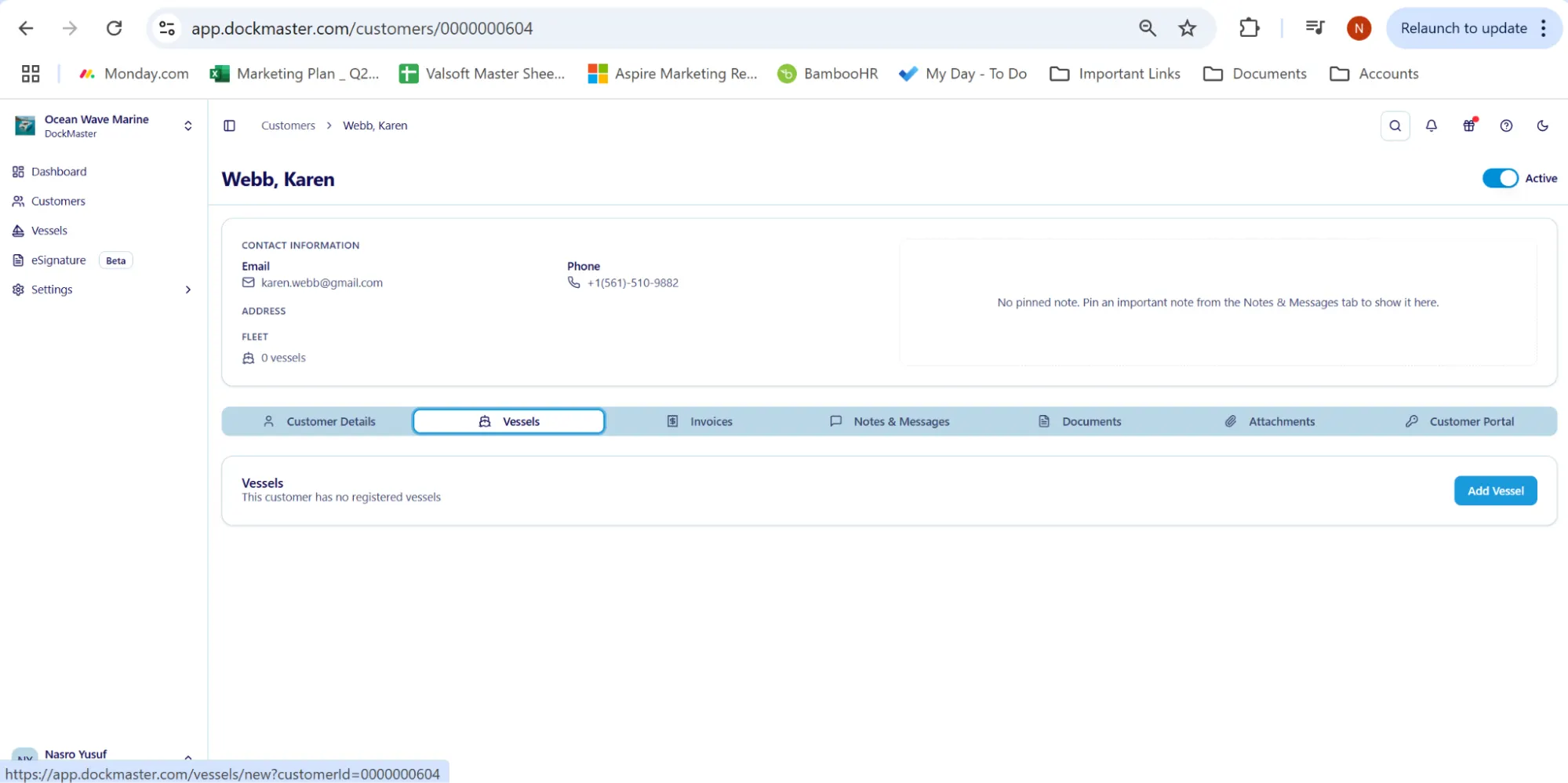
DockMaster’s Customer & Vessel Management system strengthens loyalty by personalizing interactions. Operators can maintain detailed profiles of each boater, including vessel info, service history, and account activity. This allows staff to anticipate customer needs, offer tailored services, and deliver timely communications.
Here’s how it does it:
-
Links accounts to reservations, payments, and services to simplify management
-
Provides CRM-driven insights into customer behavior for targeted upsells and engagement
-
Lets staff access member profiles on mobile, at the dock or remotely
C. Improved capacity planning
Knowing active members helps manage slips, staff, and maintenance more efficiently. It also helps track which members have recurring slips versus short-term or variable docking fees.
DockMaster’s Visual Marina Management shows slip occupancy in real time. Operators can drag and drop to assign slips, manage partially occupied slips, and track vessel dimensions like length overall (LOA) and length waterline (LWL).
This helps with:
-
Real-time tracking of member usage and slip availability
-
Managing short-term docking alongside regular memberships and variable fees
-
Planning staff and maintenance based on actual occupancy
DockMaster Web adds cloud access for remote marina management. Staff can view and update customer and vessel records anywhere. Digital updates sync across departments automatically, reducing errors and delays.
This platform also helps you in this way:
-
Lets staff manage customer and vessel info remotely without returning to the office
-
Replaces paper forms and notes with updates that sync automatically
-
Shares real-time updates across departments to avoid delays
-
Keeps communication centralized with timestamped notes and profiles
-
Frees staff to focus on serving boaters instead of paperwork
These tools let operators see which slips members use and which are billed variably. This improves planning for staffing, maintenance, and revenue collection, keeping marina operations organized and efficient.
D. Upsell opportunities
Members are good candidates for storage, winterization, repairs, rentals, and events. DockMaster makes upselling easier by consolidating customer, vessel, and account information. Staff can see who needs services and offer them efficiently.
DockMaster supports upselling with:
-
Integrated point-of-sale (POS) and service billing for estimates, approvals, and work orders without re-entering data
-
Real-time tracking of mobile technician time, inventory, parts, and materials
-
Automated notifications and reporting to highlight opportunities for additional services
-
Flexible rental options and short-term docking management with partial slip usage and optimized space allocation
-
Financial analytics to identify revenue trends and track performance across customer segments
Similarly, DockWorks by DockMaster is a web-based platform that helps manage work orders for repairs and maintenance. Digital contracts, automated check-ins, and mobile-friendly reservations simplify service operations. Additionally, integration with platforms like FuelCloud and MarineSync helps monitor vessel location, utility use, and maintenance needs. Automated alerts notify staff about unusual usage or maintenance issues.
Full visibility lets staff offer relevant add-ons to members. It improves efficiency, increases revenue, and keeps members satisfied.
Choosing the Right Docking Strategy
With the decline in boat ownership, subscription models are gaining momentum. For example, boat clubs and marina memberships let people access boats without long-term commitments. Plans often include docking, maintenance, and basic services.
Similarly, eco-conscious boaters choose marinas that prioritize sustainability. Marinas can attract and keep them by adding electric charging stations and solar-powered docks. To stay relevant and competitive, marinas must offer flexible memberships, personalized experiences, and advanced tech-driven services.
DockMaster helps manage marina operations with an all-in-one marine management software. It handles bookings, payments, and customer data in one place, while integrating with modern tech tools.
Read to make your move? Contact us today and see how we can help you meet and exceed customer expectations!