

In 2026, marine operators faced rising labor and operational costs and tighter margins. Disconnected systems, manual processes, and siloed data quietly undermined performance. The impact wasn’t always visible on a single line of a financial statement, but it grew every day, with slower decision-making, delayed revenue, and declining profitability.
While operators often focused on tools, staffing, or equipment to improve efficiency, the hidden cost came from fragmented workflows and information. Tasks that should have been simple, including tracking inventory, approving work orders, or communicating with customers, became time-consuming challenges that drained both resources and morale.

In this article, we will explore how a marina management software like DockMaster streamlines operations and improves visibility, efficiency, and customer experience. We’ll also discuss how it helped Shearwater Marine, a South Florida marine repair and service company, consolidate workflows into a unified system.
When Fragmentation Becomes a Financial Liability

According to a recent study, nearly 70% of industry workers spend more than 20 hours a week seeking information across disconnected systems rather than doing productive work. The marina industry is no different.
Disconnected technology wastes time, slows revenue, and makes it harder to stay competitive. Here’s how it affects marinas.
1. Disconnected tools across operations
Marinas and repair facilities often use separate systems for different tasks. For example, accounting may run in one system, while service and work orders are managed in another. Inventory may be tracked outside the main operational system, and approvals or documents often move through email or other third-party platforms.
This mix of tools forces staff to switch between systems, copy information, and spend hours each week on manual tasks.
2. Administrative costs rise significantly
With staff manually consolidating data and fixing mistakes, administrative work quickly piles up. When people spend hours moving information between different systems, they lose time that could be spent on work that grows the business. On average, marina operators spend 15–20 hours a week on these manual tasks, which can cost $35,000–$45,000 per facility per year just to manage fragmented systems.
When teams spend so much time on data reconciliation, they cannot focus on revenue‑generating activities or high‑value customer interactions. The result is slower operations, higher costs, and staff tied up in low‑value tasks.
3. Revenue and cash flow slow down
Disconnected systems delay invoicing, payments, and cash‑flow visibility. When billing depends on multiple platforms and manual handoffs, invoices go out late, and follow‑ups lag. This reduces working capital and slows revenue cycles, making it harder for operators to invest, grow, or adapt.
Every year, marinas lose 15–20% of revenue due to communication breakdowns and inefficiencies caused by manual, disconnected processes.
4. Profitability gets blurred by fragmentation
When job costs, parts margins, and labor hours live in separate systems, operators cannot see true project‑level margins. Fragmentation keeps leaders from seeing up-to-date information on profits, inventory, and the progress of work orders. This forces teams to rely on outdated spreadsheets or delayed reports instead of making proactive decisions.
In fact, industry research finds that 20% of software budgets get wasted on complexity and underused tools, draining revenue and affecting decision speed and quality.
5. Leadership decisions rely on old data
Fragmented systems create lagging data streams. Leaders end up making strategic decisions based on outdated reports or partial performance views. Decisions that affect pricing, staffing, vendor relationships, or capacity planning become reactive instead of proactive.
Organizations with disconnected data report significant gaps in cross‑functional information sharing, with just one‑third describing their systems as fully integrated.
How a Marina Management Software Can Consolidate Operations

The challenges created by fragmented systems are not unique to any one marina or repair facility. They are structural problems that require an integrated approach rather than more tools layered on top of existing ones.
DockMaster was built specifically for marine operations to address this fragmentation. Instead of separating accounting, service management, inventory, marina operations, and customer communication across multiple platforms, DockMaster brings these functions together into a single, integrated system.
Here’s how:
-
Service management: Create estimates, collect eSignatures, track time on mobile devices, and generate reports quickly
-
Inventory management: Track stock in real time, manage purchase orders, print barcodes, and update POS records automatically
-
Financial management: Handle accounting, process invoices, reconcile bank accounts, and run financial reports in one place
-
Marina Operations: Manage slip assignments, reservations, billing, and customer information efficiently
-
Payments: Process transactions securely and integrate them into operational and financial records
This unified structure helps reduce manual work, improve visibility across departments, and keep operational data consistent from the front office to the field. With fewer systems to manage and less data to reconcile, teams can spend more time on service delivery, customer communication, and operational oversight.
How Shearwater Marine Improved Operational Visibility with DockMaster

Few organizations illustrate the tangible cost of operational chaos better than Shearwater Marine, a South Florida-based marine repair and service company. Like many service-oriented businesses, Shearwater Marine repairs boats while delivering strong customer experiences. Every service call, every repair, and every interaction is part of a broader promise of quality and reliability.
Before DockMaster, Shearwater Marine faced several operational challenges. For example:
-
Scheduling relied on handwritten timesheets that had to be transcribed into the system. This was a labor-intensive process prone to errors.
-
Service managers and mobile technicians spent significant time on administrative work, leaving less time for customer-facing activities.
-
Financials, inventory, and work orders were scattered across separate tools, limiting visibility into project profitability.
-
Reporting was cumbersome. Leadership had to manually pull data from multiple sources to understand margins, productivity, and inventory status.
As Jed Wood, Vice President and General Manager, explained:
“Formerly, it was all handwritten timesheets, which required transcribing into the system, which is a very labor-intensive process. The mobile app has helped to streamline that process and make scheduling more efficient for the technicians.”
DockMaster changed the way Shearwater Marine operated. By consolidating financials, inventory management, service orders, and work management into a single platform, the company achieved efficiency, visibility, and scalability.
1. Higher efficiency with DockMaster Mobile
With DockMaster Mobile, technicians could now log hours and track work orders in real time, eliminating the need for manual transcription. This reduced errors, saved time, and allowed managers to focus on higher-value tasks.
“DM mobile has helped us save time. The service writers, the service managers can then pay more attention to the customer service side of their job, which is actually the most important piece in our business,” said Wood.
As administrative demands decreased, staff shifted their attention toward customer engagement, aligning with Shearwater Marine’s business model.
2. Faster approvals and clear communication
DockMaster’s eSignature and estimate functionality allowed staff to generate estimates, collect deposits, and get approvals while the customer was present. All documents are automatically synced to the customer file, eliminating secondary filing and processing.
“Sending the interface with the customer there allows them to review, sign, and make deposits quickly and easily. The documents are then folded back into their actual customer file. So, it completely eliminates the need for secondary filing and processing,” Wood noted.
Additionally, the customer portal provided real-time updates on projects, including status, cost, and completion timelines. This transparency improved the overall customer experience while reducing repetitive inquiries to service staff.
“The ability to communicate with the customer in essentially real time, providing them the data that they are looking for—what’s happening with my project right now, how much is it costing, when will it be done—these are basic questions that can be answered quickly with the proper level of communication through DockMaster,” Wood explained.
3. Visibility and decision-making with reporting
DockMaster’s reporting capabilities gave management a clear view of the business. From inventory and work orders to profit margins and balance sheets, the platform provided insights that were previously difficult to obtain.
“DockMaster provides that unified product suite to give me visibility to pull together all the various components of the business in one place. For my daily job responsibilities, including reviewing reporting, financials, and workflow, it has powerful reporting to bring all the pieces together in a coherent fashion,” said Wood.
With this visibility, Shearwater Marine could:
-
Track profitability at the project level
-
Monitor productivity and parts margins
-
Make informed strategic decisions based on real-time data
Jed summarizes the impact:
“If you’re looking for a software platform that can help you become more efficient, more profitable, and scale your business, it really has all the features that you need to run a marina or marine repair facility.”
What changed after DockMaster
The results of adopting DockMaster were clear and measurable:
-
Time savings: Administrative tasks like timesheet transcription and manual filing were eliminated.
-
Improved customer experience: Real-time project updates, easy approvals, and clear documentation reduced friction for clients.
-
Data-driven decisions: Consolidated reporting enabled better financial and operational insights, driving profitable actions.
-
Scalability: The company could take on more projects without sacrificing customer service or operational control.
From Operational Chaos to Operational Control
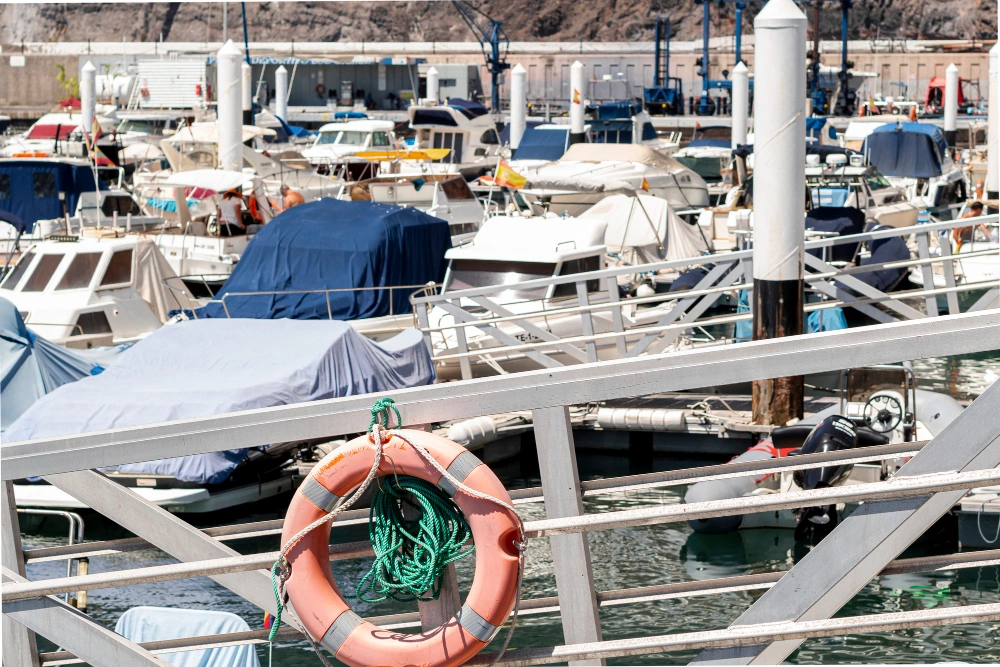
Operational chaos increases costs in ways that rarely appear clearly on a profit-and-loss statement, but the impact adds up quickly. Fragmented workflows slow decision-making, introduce errors, and weaken the customer experience over time.
DockMaster addresses these challenges by bringing financials, service management, inventory, reporting, and customer communication into a single, integrated platform. This level of consolidation helps marine operators reduce manual work, improve visibility, and regain control over daily operations.
Shearwater Marine’s experience shows the impact of this approach in practice. With DockMaster supporting its operations, the team reduced administrative overhead, improved communication with customers, gained clearer insight into profitability, and allowed staff to spend more time focused on service quality instead of system management.
For marine operators in 2026 and beyond, operational clarity is no longer optional. It directly affects efficiency, margins, and the ability to grow without adding unnecessary complexity.
“I definitely recommend DockMaster to any business who is looking to become more efficient in their process, better communicate with their customers and crews, and work from an integrated platform,” Wood concludes.
If your operation still relies on disconnected systems, it may be time to assess the real cost of fragmentation. Learn how DockMaster can help consolidate workflows and provide the visibility needed to run a more efficient marine business.